Get your course in 3D

Article

Golf course marketing: 12 practical ideas

What actually fills tee times and keeps members engaged, for clubs without a marketing department.

Most golf course marketing advice is written for companies with a marketing team. Most golf clubs have a manager, a part-time administrator and a committee. This list is for them. It starts with the dull fixes that affect every visitor and works up to the bigger ideas. One of them is the product we make. The other eleven are not, and several matter more.

1. Fix the booking path first

Before spending anything on promotion, try to book a tee time on your own website using your phone. Count the taps. Note where you get confused. Many clubs lose visitors at this step and never know it.

Good signs: a "Book a tee time" button visible without scrolling, availability shown on one screen, guest booking without creating an account, and a confirmation email that arrives straight away. Every other idea on this list sends people to this path, so it has to work.

2. Treat your Google Business Profile as a homepage

For many golfers, the first thing they see is not your website. It is your listing in Google Search and Maps. Check that your opening hours, phone number, website link and booking link are correct. Add recent photos of the course in good light, not the clubhouse car park from 2017. Use the posts feature for events and offers. It is free and it is often seen more than your site.

3. Ask for reviews, and answer them

Reviews shape how visitors choose between courses. The easiest way to get more is to ask: a line in the post-round email, a small card at the pro shop counter, a QR code by the 18th green. Then reply to every review, good and bad, briefly and politely. A calm reply to a complaint about slow play reads well to the next visitor.

4. Make the course page show the course

The course page is where a visitor decides whether your course is worth the trip. Too many clubs offer a scorecard PDF and an aerial photo. Ask what a first-time visitor needs: how each hole plays, where the trouble is, what the setting looks like.

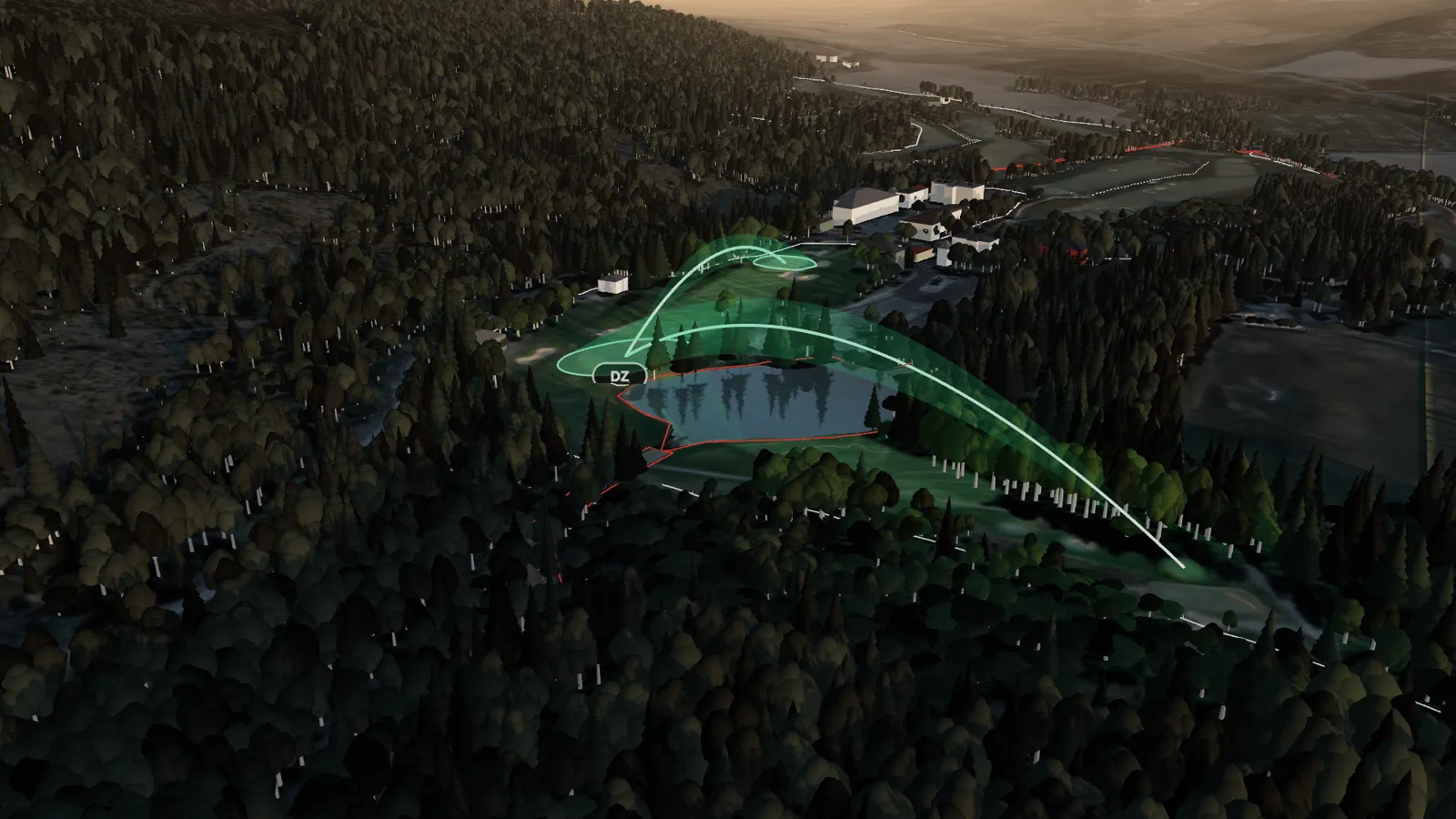
There are several ways to do this. Hole-by-hole photos and a short note on each hole are a solid start. A local photographer or a drone operator can add atmosphere. And an interactive 3D golf course map lets visitors fly each hole from tee to green, see hazards and read the greens. You can see one on Hakadal Golfklubb in Norway.

Hakadal Golfklubb · a flyover clip rendered from the 3D map, the kind of asset that feeds ideas 4 and 8

5. Build a simple email list, then segment it

Every visitor who books online gives you an email address. Ask for permission to stay in touch and use it. You don't need a complex system. Three lists go a long way: members, visitors and society organisers. Each wants different things. Members want course news and competition results. Visitors want offers and reasons to come back. Organisers want availability and packages.

One good email a month beats a weekly one nobody opens.

6. Fill quiet tee times on purpose

Every course has slow periods: weekday afternoons, early spring, late autumn. Decide which slots you want to fill and design something specific for them, such as twilight rates, a weekday nine-hole offer or a "play and dine" package with the restaurant. Send it to the visitor list, not to everyone, and give it an end date.

7. Make societies easy to say yes to

Golf societies and corporate days bring groups, food and bar spend. The organiser has to sell your course to a group, so help them. Create a societies page with sample packages, a clear contact and a quick enquiry form. Give them something to forward: course photos, a hole guide or a link to an interactive map. Afterwards, send photos from the day and an early offer for next year.

8. Plan a content calendar around the course

Social media gets easier with a calendar. The course itself provides plenty of material through the year:

  • Hole of the week. A photo or a short hole flyover clip with a line on how to play it.
  • Greenkeeping updates. What the team is doing and why. Members appreciate it and it heads off complaints about hollow-tining.
  • Green of the month. Show the slopes on a famous or feared green. A green reading map view makes this easy.
  • Competition results and photos. Tag the winners. They will share it.
  • Seasonal moments. First frost, the course in full summer, autumn colour on the tree-lined holes.

9. Partner with local accommodation

Hotels, guesthouses and holiday lets near the course have guests who play golf. Offer them a simple stay-and-play arrangement, a preferential rate or just a well-designed card for their reception. In return, ask for a link from their website. If you run a resort yourself, the guest journey is in your hands. Our page for golf resorts goes into that.

10. Open the door to beginners

The long-term health of a club depends on new golfers. Many people would try the game if it felt less intimidating. Taster sessions with the pro, beginner-friendly tee times, a relaxed nine-hole league and a clear "new to golf" page on the website all help. Market these to people who don't play yet, through local groups, schools and workplaces, not just to your existing list.

11. Let members do the recruiting

Members are your most credible marketers. A simple referral scheme, such as a reward for the member and a welcome offer for the friend, gives them a reason to talk about the club. Make the club easy to show off: a good course page and an interactive map are things members can send to friends with one link. For more on how clubs use maps with members, see our page for golf clubs.

12. Measure where bookings come from

None of this is worth much if you can't tell what works. Add campaign tags to links in emails and social posts, so your analytics show which ones lead to bookings. Ask new members how they heard about the club. Review it every quarter, stop what doesn't work and do more of what does.

Where to start

If you only do three things this season, make them ideas 1, 2 and 3. They are cheap, they affect every visitor and they make everything else work better. Then pick one bigger project: a better course page, a society package or a content calendar.

If the course page is your bigger project, see how we build 3D golf course maps, read the drone vs 3D comparison before you commission anything, or fly Pebble Beach in 3D to see what's possible. You can also start at the Golfmaps home page.

FAQ

Marketing, answered

What is the most effective golf course marketing for a small club?
Usually the unglamorous basics: a booking path that works on a phone, an up-to-date Google Business Profile with recent photos and replies to reviews, and an email list you actually use. These cost little and affect every visitor.
How often should a golf club post on social media?
Consistency matters more than volume. A steady rhythm you can keep up, such as two or three posts a week built around a simple calendar, beats bursts of daily posting followed by silence.
How do we market to golf societies?
Give organisers a dedicated page with packages, availability and a single contact, plus material they can forward to their group, such as a course map or flyover. Then follow up after the day with photos and a rebooking offer.
Is it worth paying for golf advertising?
Paid ads can work for specific goals, such as filling a quiet period or launching a membership offer. Fix the booking path and course page first, so the clicks you pay for land somewhere that converts.
How can we show the course online if we cannot afford a drone shoot?
Good photography by a member with a decent camera goes a long way. An interactive 3D course map built from public LiDAR data is another option that does not need anyone on site. Our drone vs 3D comparison covers the trade-offs.

Show them the course before they book.

Send us the name of your course. We build it in 3D from LiDAR and imagery, and you paste one line of code into your website.